What Is Awadhi Cuisine? Galouti, Dum Pukht and the Lucknow Kitchen, Explained
Slow cooking, gentle spice and a Nawabi love of refinement. Here's what actually makes Lucknow's food Awadhi.
By Nukkad Talks Desk
· 4 min read
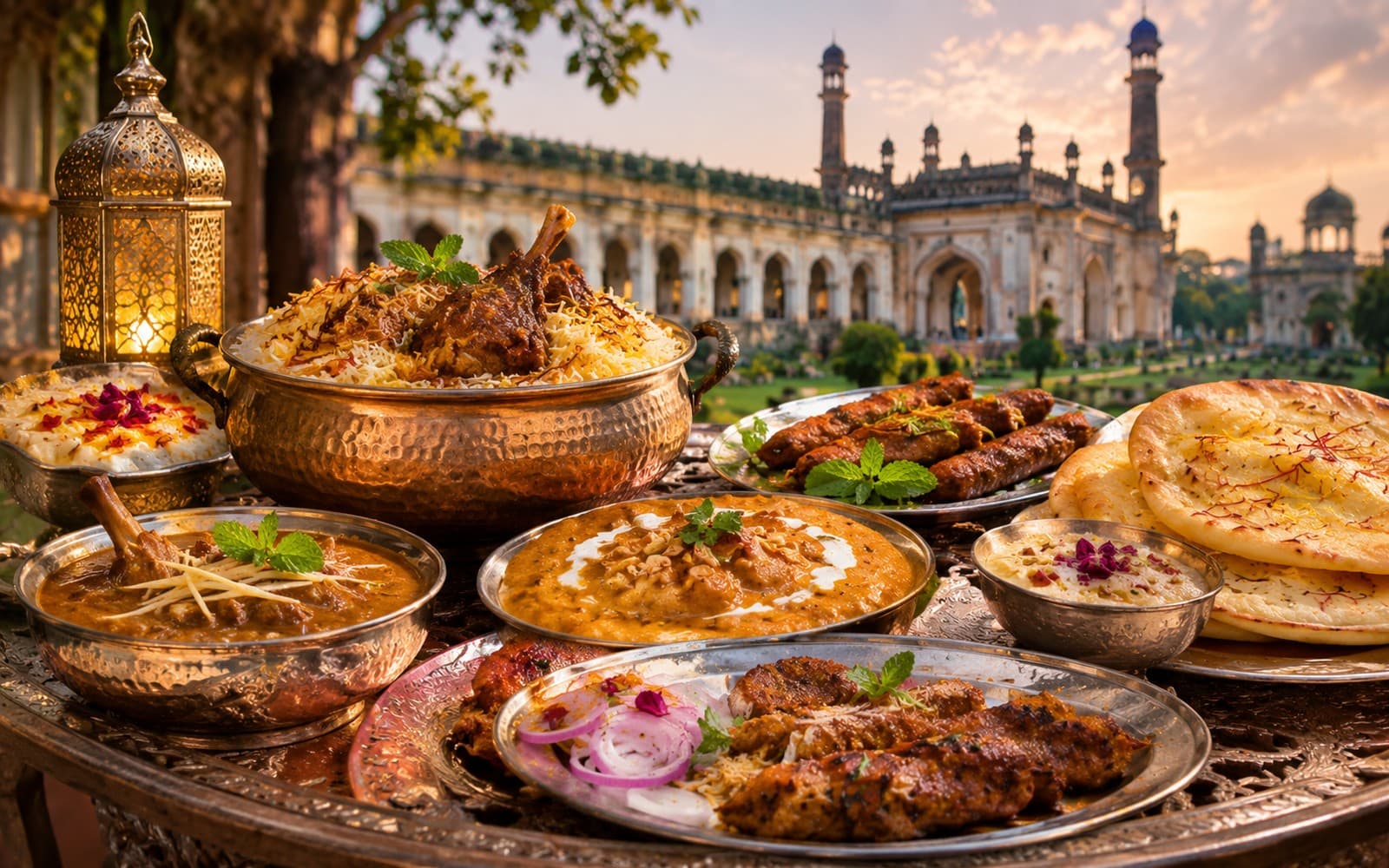
Say 'Awadhi food' and most people think of Lucknow's kebabs and biryani. That's right, but it's only half the story. Awadhi cuisine is the cooking tradition of the old Awadh region, shaped by the court kitchens of the Nawabs, who made Lucknow their capital in the 1770s after moving from Faizabad.
The big idea is refinement. Where some North Indian cooking leans on heat and heaviness, Awadhi cooking leans on aroma, texture and patience. Spices are used to perfume a dish rather than to overpower it. Cardamom, mace, saffron, kewra and rose water show up often, and ghee does a lot of the heavy lifting.
“It's less about heat and more about patience.”
Dum pukht is the technique most closely tied to the cuisine: food is sealed in a heavy handi, often with a ring of dough around the lid, and cooked slowly over a low flame in its own steam. A popular story links it to the Bara Imambara's construction in the 1780s, when large vessels of food were kept cooking for workers, though like many food origin stories it's more legend than record.
The signature dishes tell the same story. Galouti and kakori kebabs are about extreme tenderness. Nihari is a long, slow stew. Lucknowi biryani uses a gentler, aromatic style of dum cooking. Sheermal and warqi paratha are the breads that go alongside. Vegetarians aren't left out either: Lucknow's chaat, kachori-sabzi breakfasts and mithai are all part of the same food culture.
How is it different from Mughlai? The two overlap, and in everyday restaurant menus the lines blur. A useful rule of thumb: Awadhi food tends to be subtler and more delicately spiced, with a stronger emphasis on slow cooking and texture.
The best way to understand it is to eat it. Start in Chowk and Aminabad for the old-school versions, then compare with restaurants around Hazratganj and Gomti Nagar that serve dum-style dishes. At home, the easiest way to borrow the idea is simple: lower the flame, seal the lid, and wait.
Nukkad Talks Desk
The Nukkad Talks editorial team, writing about Lucknow's food, streets, culture and everyday life.