Chikankari Shopping in Lucknow: Where to Go and How to Spot the Real Thing
Lucknow's famous white-thread embroidery, explained: the best markets, the stitches to know and the signs of a genuine piece.
By Nukkad Talks Desk
· 5 min read
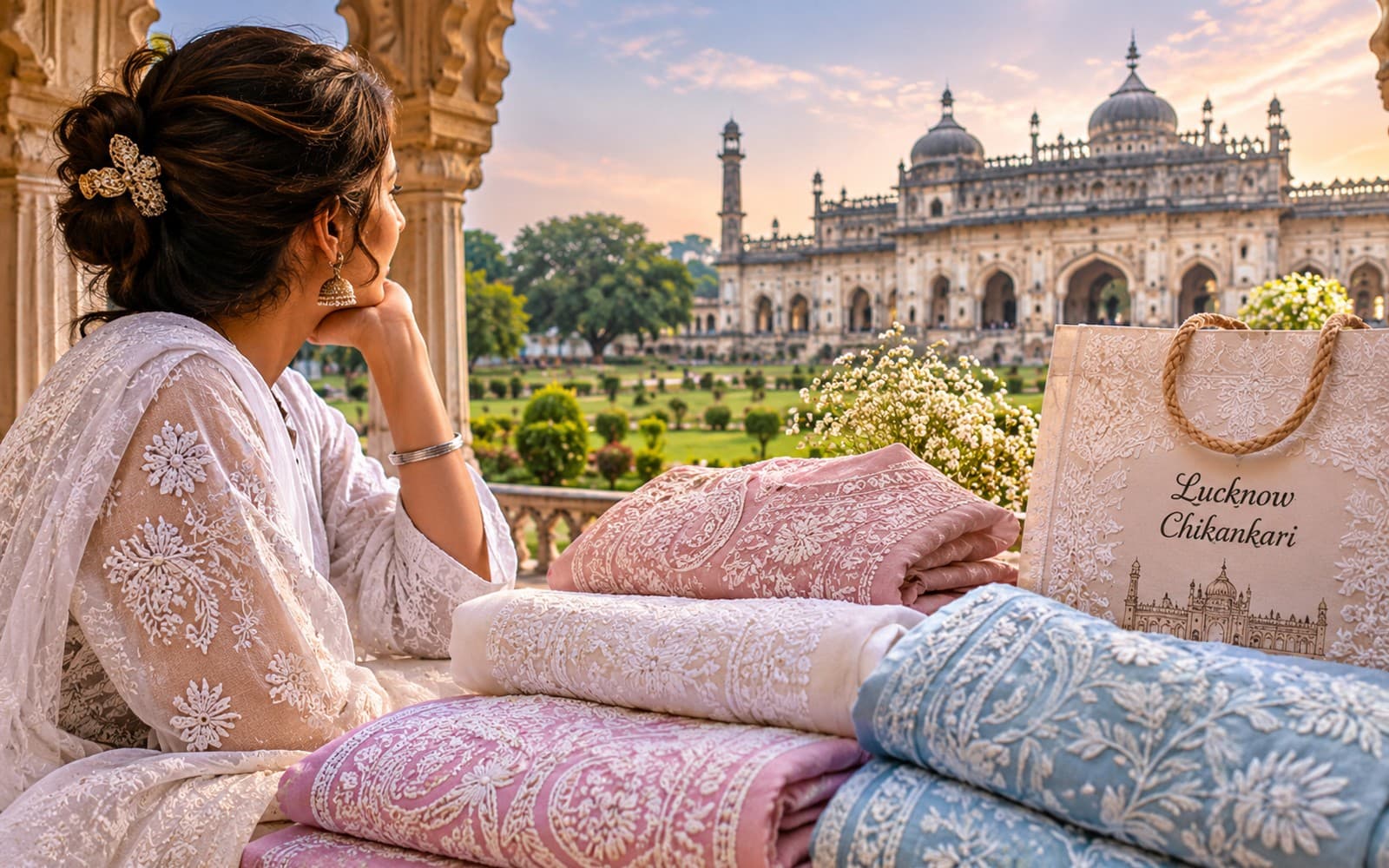
Chikankari is Lucknow's signature craft: delicate, mostly white-on-white embroidery done by hand on fine fabric. The craft has a Geographical Indication (GI) tag, which recognises it as belonging to Lucknow. It's also one of the most copied crafts in India, so knowing what you're buying matters.
Where to shop. Chowk is the traditional heart of the trade, with lanes of shops and a wide range of prices. Aminabad is a busy, bargain-friendly market. Hazratganj and the Janpath area have more showroom-style stores with fixed prices and a calmer experience. Try at least two kinds of shop before you buy.
How the craft is made. A design is first printed onto the fabric with removable dye, then embroidered by hand, and finally washed. Much of the work is done by artisans, often women, working from home, which is one reason genuine pieces take time and cost more than printed imitations.
“Real chikankari is slow. If it's very cheap, ask why.”
Stitches worth knowing. Bakhiya, also called shadow work, is done from the back of the fabric so the pattern appears as a soft shadow on the front. Tepchi is a long running stitch. Murri and phanda are tiny knot-like stitches used for flowers and buds. Jaali is the lace-like open work. Ask a seller to point them out. A good one will enjoy doing it.
Spotting the real thing. Turn the garment over. Hand embroidery usually shows small natural variations and tidy thread ends. Machine-made or screen-printed imitations tend to look perfectly uniform and flat. Also check whether the embroidery sits cleanly in the fabric, and ask where and by whom the piece was made.
Fabric choices. Cotton and mulmul are light and comfortable for warm weather, while georgette, chiffon and silk are dressier. Hand-embroidered work on finer fabric will generally cost more.
Bargaining. It's expected in the old markets and not in fixed-price showrooms. Be polite, compare a few shops first, and don't push so hard that the price stops being fair to the person who made it.
Care. Wash gently by hand in cold water with mild detergent, dry in shade, and iron on the reverse. Treated well, a good chikankari piece lasts for years.
Nukkad Talks Desk
The Nukkad Talks editorial team, writing about Lucknow's food, streets, culture and everyday life.